
There’s only so much time you can spend with a professional teacher without breaking the bank. AI, however, is always available, doesn’t get frustrated explaining the same thing for the 100th time, and doesn’t cost a fortune. In theory, it sounds like an ideal learning setup. But how does it work in reality? In this post, we’ll look at how you may use ChatGPT for language learning, what it can and can’t do, and try to answer the big question: should you use ChatGPT to learn a language?
Why ChatGPT?
The AI market in education has been steadily growing in recent years. The compound annual growth rate of generative AI in the education market is expected to grow 39.5% from 2024 to 2033. About 67% of educational institutions worldwide report using AI in their teaching, and 47% of the students say it has improved their academic performance.
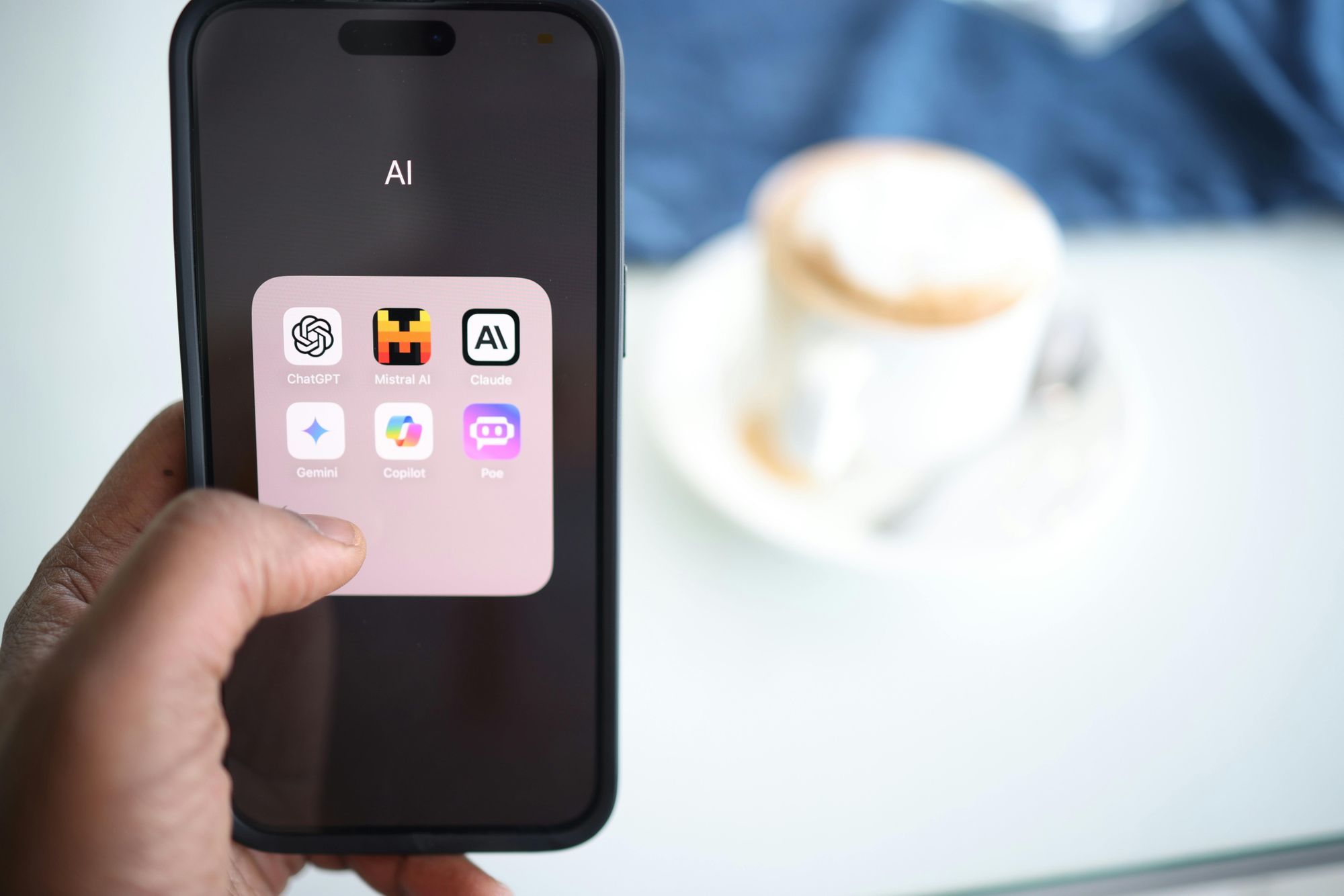
Large Language Models (LLMs) are currently one of the leading AI technologies. LLMs power popular chatbots like ChatGPT, Gemini, and many others by using patterns learned from massive amounts of text to predict the most likely next word. This is a simplified way of describing how these models work.
Not all AI language-learning tools rely on LLMs, though. For example, vocabulary quizzes, spaced-repetition platforms like Glossika, or pronunciation trainers may use very different kinds of technology. But when it comes to language learning, the focus is on the language itself, which makes LLMs the most intuitive AI tool to use.
In this post, we’ll focus on free version of ChatGPT 4 since it’s the most accessible to language learners.
How to use ChatGPT for language learning
ChatGPT is very skilled at, well, chatting. It can be a tireless conversation partner, an explain-it-like-I’m-five pro, and it can provide you with endless content. Let’s go over some of the ways you can use ChatGPT in your language learning.
Creating a study plan
ChatGPT can help you create a personalized plan for your studies. Most traditional language learning plans focus on developing skills in speaking, listening, reading, writing, and pronunciation.
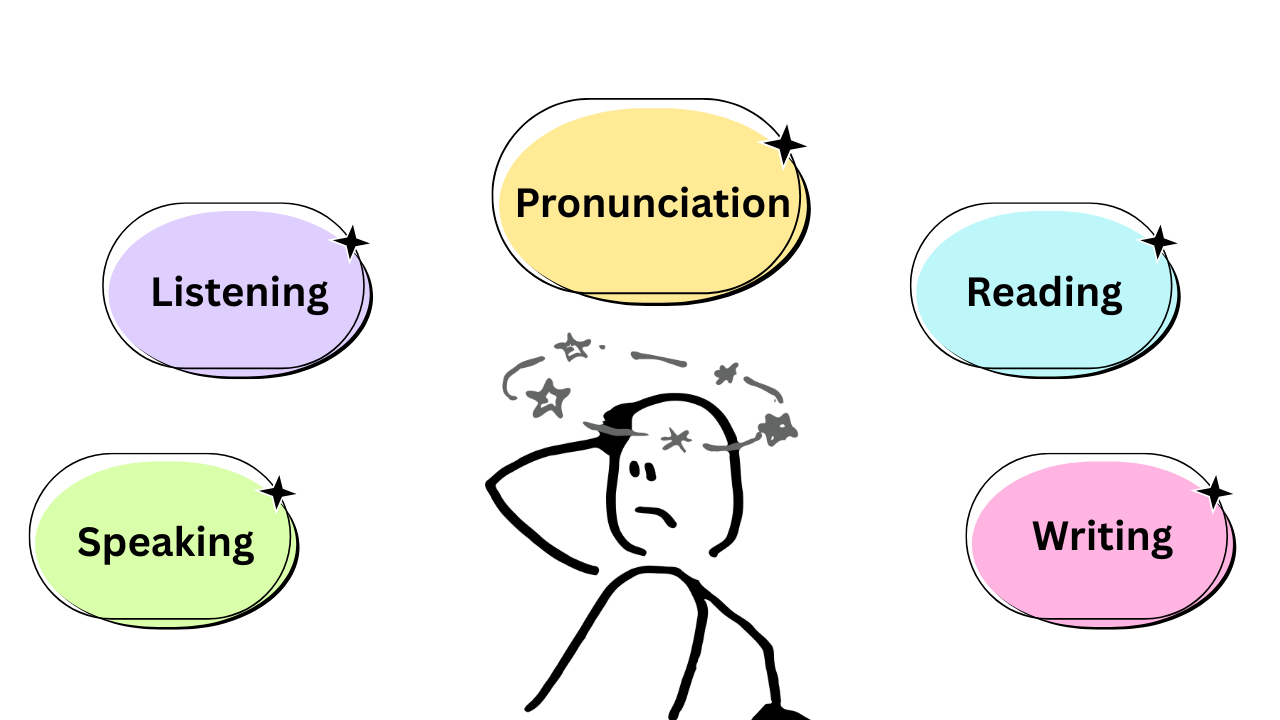
If you don’t have a teacher’s support, it may be challenging to juggle all these areas on your own. For example, some learners may engage with content in their target language, but rarely push themselves to have conversations or write. Most self-learners would benefit from having a study plan that keeps them accountable and helps make their language learning well-rounded.
Explaining Grammar
Language learners are famously not very fond of grammar drills. They are repetitive, boring, and most frustratingly, they don’t really stick with most of us for a long time.
Traditional textbooks usually make grammar the backbone of your studies. It’s a logical pathway that guides you from easier things to more complex ones, but it doesn’t always result in meaningful progress. Don’t get me wrong—grammar is essential in language learning. But grammar doesn’t exist in a vacuum. Context is key for our brains to actually remember grammar. That’s why, for many learners, it’s easier when the grammar explanations not preceed but follow contextual learning.
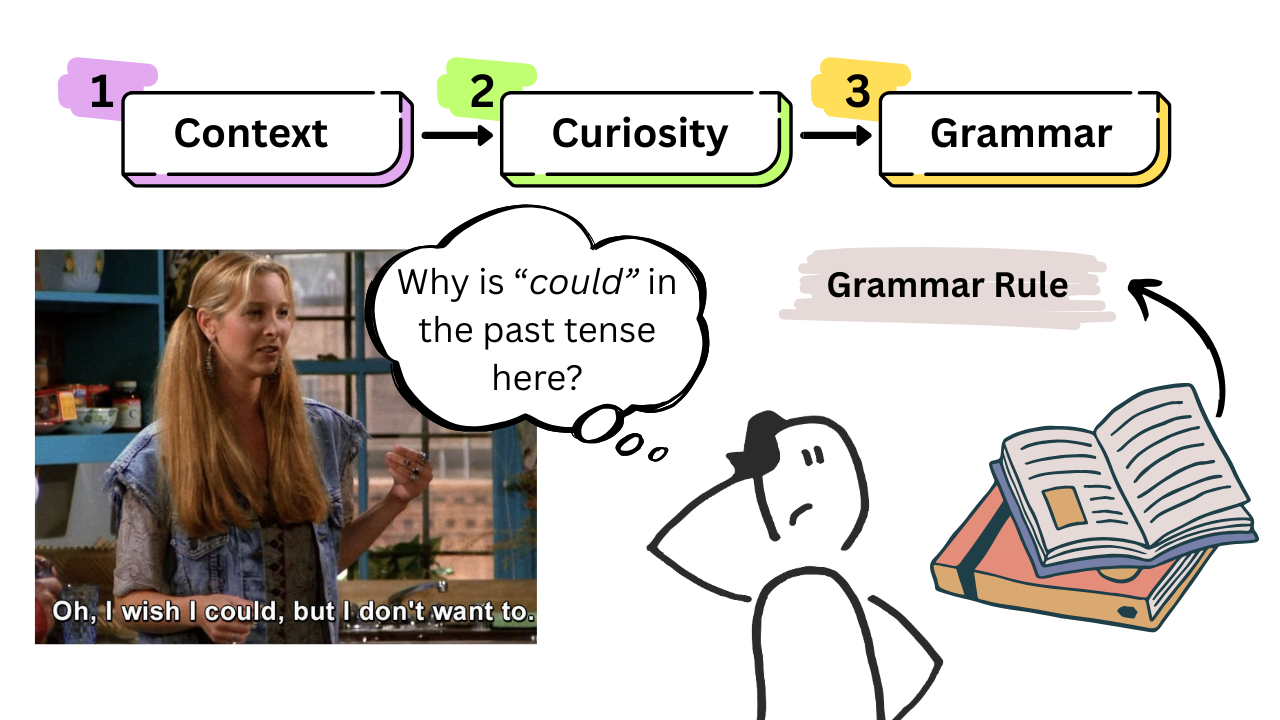
When you encounter new grammar structures in blog posts, social media, or TV, use it as an opportunity to trick your brain into paying attention to the grammar. That’s when you can go to ChatGPT and ask it to explain a particular grammar point with examples and simple exercises to practice right away and make it stick.
Giving feedback on writing
We already use AI in writing daily when we let apps like Grammarly check our spelling or use built-in tools to automatically finish our emails. You can use ChatGPT when you need to write something in your target language and aren’t quite sure if it sounds natural.
Ask Chat GPT to:
- Point out if it’s a grammar, punctuation, or a style issue and explain why.
- Explain why it suggests certain changes instead of what you originally wrote. Be critical when reviewing the suggestions—some tools, like DeepL, might rewrite perfectly correct sentences just for the sake of rewriting.
- Show how the sentence should look, with an example from a trustworthy source.
Simulating real-life dialogues
It’s a great way to practice real-life situations without real-life anxiety. You can ask ChatGPT to chat about random topics as your virtual pen pal. Ask it to create a list of imaginary scenarios where you’ll need to speak, for example, at the supermarket or bank. It’s especially beneficial if you not only write but also record yourself speaking. This way, you’ll be able to actually train your mouth muscles to speak. Next time you have to speak offline, you’ll likely find it much easier with the phrases you’ve already practiced.

Generating learning content
It’s generally easier to create content directly in ChatGPT than to have it search the web and send you links. While some versions of ChatGPT can search the internet, this feature isn’t always available, especially on a free plan. Instead, ask it to generate content tailored to your needs.
Ask ChatGPT to:
- Create learning content from scratch. Let ChatGPT know your current level, the grammar patterns you want to focus on, and the topic you're interested in.
- Turn existing content into an engaging language learning exercise. Upload the content that you’d like to study and let ChatGPT analyze it. Ask it to provide you with reading or listening comprehension questions, highlight the challenging words for your level, and ask to use them in a different context.
- Find suitable content online based on your interests, level, and the skill you want to practice (reading or listening). ChatGPT can create a list for you with short overviews of each link.
Is it actually as good as it sounds?
It’s not all sunshine and rainbows. ChatGPT is a powerful technology for language learners, but it has its weaknesses.
ChatGPT has hallucinations
Once, I tried to find YouTube channels in my target language. I asked ChatGPT to compile a list of ten channels with a set of criteria. I was excited to see that it actually found ten channels, only to discover that nine of them were totally made-up.
As OpenAI puts it, "hallucinations" is ChatGPT’s "tendency to invent facts in moments of uncertainty". ChatGPT may often be like this annoying person in a group who has no idea what they’re talking about. Yet they speak so bluntly and confidently that you start to second-guess yourself. That’s exactly what ChatGPT sometimes does; it will tell you the most bizarre disinformation, making it sound like a fact. A 2023 study found that 28 out of 178 research references ChatGPT gave didn’t exist. ChatGPT is always improving, and many prompts that made it hallucinate a year ago now produce a reliable answer. But you can’t take anything for granted.
As a language learner, you need to be extra cautious because if you’re studying a language, you can’t easily catch ChatGPT in a lie. It may be tiresome to double-check every single fact it tells you.
Not all languages and dialects are equally represented
If you’re interested in learning a standard version of a language that is popular and well-established, you’ll be fine using ChatGPT occasionally.
But if you’re learning an underrepresented or endangered language or a particular dialect, you might find that ChatGPT doesn’t help much. It’s trained on a massive amount of texts, and there are more texts available in certain languages. Some languages don’t have a large enough volume of text available to properly train the model. The fewer resources there are in a language, the less accurate ChatGPT’s output is going to be. For example, Spanish model MarIA uses a corpus of up to 135 billion words, while in Catalan (a Romance language primarily spoken in parts of Spain, Andorra, France, and Italy), they are limited to just 1.7 billion words.

Basque, another indigenous language spoken in Spain, simply doesn’t have an amount of texts large enough to properly train a model. So, if you’re learning a language like Swahili, Kyrgyz, or Assamese, it’s better to stick with traditional language-learning materials.
ChatGPT has linguistic biases
ChatGPT is definitely strongest in English as it has the most training data available. Right now, English is the most spoken language in the world, counting both native and non-native speakers. However, ChatGPT was trained on the standard versions of English—American and British. Studies indicate that ChatGPT is biased against non-standard varieties of English, such as African American English, Indian English, Irish English, Jamaican English, Kenyan English, Nigerian English, and others. AI produces different responses based on the English dialect a person uses.
Prompts in less common English varieties often lead to stereotyping, misunderstandings, and condescending responses. Something to keep in mind if you’re learning a less established variety of a language.
It may be difficult to get what you want from ChatGPT
When writing this post, I used ChatGPT to help me with learning Serbian to see for myself if the popular advice on the internet actually works. I asked it to create a study plan with 30-minute daily lessons based on my B2 level. It suggested that we start with listening practice. I spent ten minutes of my first ChatGPT lesson going back and forth because the videos it provided for my listening practice were either
- too easy (very basic A1 dialogues),
- or narrated in English with Serbian subtitles (doesn’t really help your Serbian listening skills),
- or weren’t available through the links ChatGPT provided.
It’s possible that with certain tasks, you’ll spend more time explaining, correcting, and specifying your prompt than actually studying.
Another example: I asked ChatGPT to generate a grammar exercise for me on the grammar topic I struggle with. It generated a mish-mash where I was supposed to fill in the brackets in English sentences with the correct forms in Serbian. It doesn’t make any sense from a learner’s perspective:
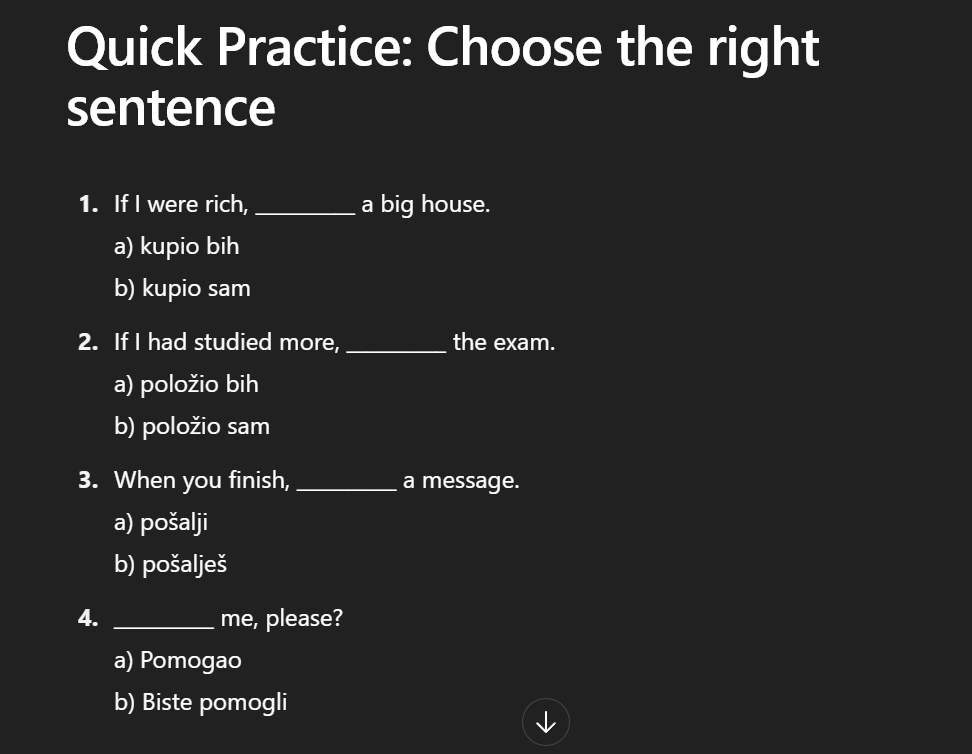
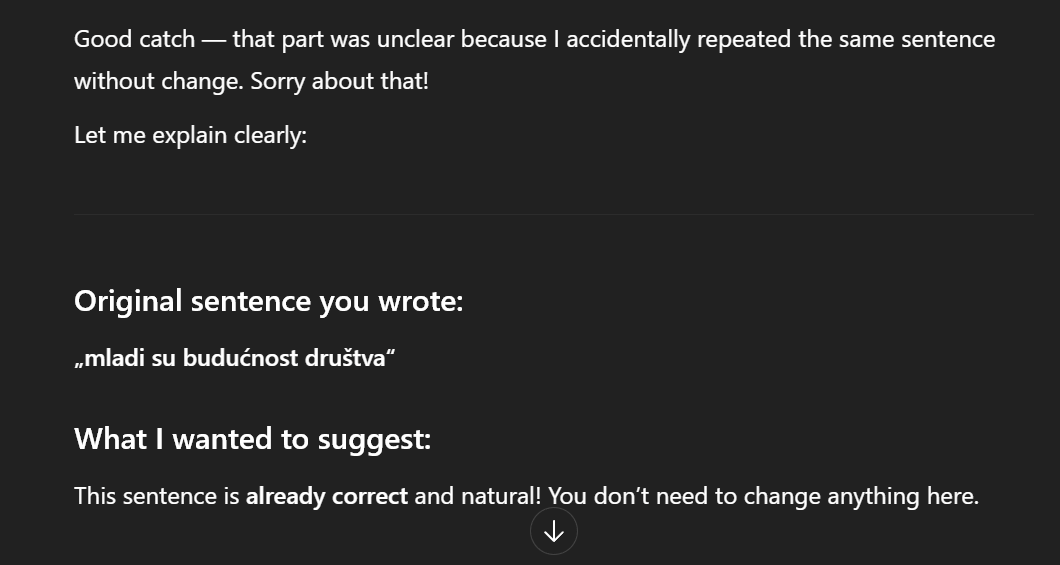
The same goes for the feedback and corrections. ChatGPT may correct its own sentences in grammar tasks, tell you it found a mistake in your writing, but suggest rewriting it the same exact way it has been written. You will spend time trying to figure out if the feedback is legit, and honestly, it gets annoying fairly quickly.
ChatGPT is simply not human
As realistic as modern chatbots can sound, they are just not human. People are spontaneous and creative in the way they communicate—they joke, invent words, use body language, and do all the subtle things that make using a new language so exciting and challenging.
ChatGPT can’t replace real practice. It won’t be able to represent different people you’ll meet in the wild: from chronically online teenagers you barely understand to business partners speaking corporate. Language is alive and constantly changing. At the same time, there are so many different people speaking their own versions of your target language that were influenced by their backgrounds, upbringings, regions, and jobs.
You can use ChatGPT to help you study, but you need to keep in mind that it just can’t give you the real picture and the real joy of being understood by fellow humans.
So, what now?
ChatGPT can be a powerful tool for language learners, especially the tech-savvy ones who can recognize the limitations of AI and use it in moderation. It’s up to you whether to trust ChatGPT in each situation. But in the end, you may notice it might actually add more work instead of making things easier.
Ideally, work with support from a teacher who can verify the most difficult parts. You can use ChatGPT to your advantage with the strategies from this post, just keep in mind that ChatGPT can’t substitute a real teacher or real human interaction in your target language. For now, the best strategy is to use it as an advanced search tool or a pen-pal when you already have some foundation in a language.
Me? After testing ChatGPT for this post, I’m sticking with a tutor till better days.

